Fractures
are natural
after a fall
from a height.
Putting pieces
together again
is also natural.
Letting them remain
separate, also
natural. Scattering
them about, also
natural. There is
so much history
for all ways of
dealing with fracture;
when confronted with
breakage there is choice:
knit, spread, or let fall
to ruin, let others
find shards years from now,
try to reconstruct
what happened.
They will get it
mostly wrong, hit on
some sharp edges
and snag some small truths,
but never take it all in.
What it once was
will be called broken
and what it will become,
a new kind of complete;
some knitting of
disparate parts
into new pictures of
what is natural;
some discarding
of what is inconvenient;
some fragmentation
into what they will call
a multifaceted world.
Tag Archives: poetry
Fractures
To The Summit
This is only one of many paths to the summit.
On this path the journey is all,
and all the work put it is work
toward the highest point attainable.
Rest is a step, detour is a step, falling
to the rocks below is a step.
This is only one of many paths to the summit.
Steps taken along this path are not counted
unless they advance progress; minimal dawdling
and meandering are welcome but are considered
time wasters when overindulged in spite of
lip service given to the importance of
dream, fancy, and inspiration.
This is only one of many paths to the summit.
On this path one must climb and only climb;
the only thing worth noting is the upward motion;
the calculation only runs upward and one wrong step
resets the count to nothing at all. There are masters
along this path who keep track of the track,
endlessly repeating the mantra: grind, grind, grind.
This is only one of many paths to the summit.
On this path, one turns each corner expecting
a sage will materialize to announce your arrival.
Even now, you are expecting someone to tell you
you are already there no matter where you are on the path.
That someone will not be me. I’m in the mist off the trail
myself, waiting for directions or at least for a sign
that I’m near to my path, or that I should keep sitting
for a while or an age, as if there is still time
or any summit at all ahead.
The Lost Tapes
Somewhere there must be
an archive that explains
all the mysteries that underpin
the truths we collectively accept
as bald and obvious
as sunrise coming
after or before sunset
depending
on where you stand
and how calm you are
about your beginning
either being forged in the dark
or germinating in the growing light
and your end either coming to you
in a dawn blaze
or the dimming
before night slides down
over all you are and
where are the tapes that explain
why you are one way
and others are another
why you are day
and others are night
and why when you meet
you cannot forge wholeness
from your separated selves
Dark Villanelle
Poem from circa 1995. I believe this is the first time posted.
This night of stars that have tunneled through the dark
has kept me up so much later than I should have been up.
A cloud across the moon fills my eyes with tears.
Watching the sun vanish opened up a night of dread.
I sat by the river fearing the dead approach of
this night of stars that have tunneled though the dark
and thrown a wink of infinity against my hope for closure.
I wish I knew who to call. I wish I knew what to say.
A cloud across the moon fills my eyes with tears.
If there were any distance to travel that would take me past the lights
to places where I could not see the open sky, I could say less of
this night of stars that have tunneled through the dark
and kept me up so much later than I should have been up.
In an hour the sun will rise but it cannot dim the memory that, like
a cloud across the moon, fills my eyes with tears.
Night, day, the cycle repeats with no hope of a change
until the day the fist of God slams down upon
this night of stars that have tunneled through the dark.
A cloud across the moon fills my eyes with tears.
Tastes Like Iron
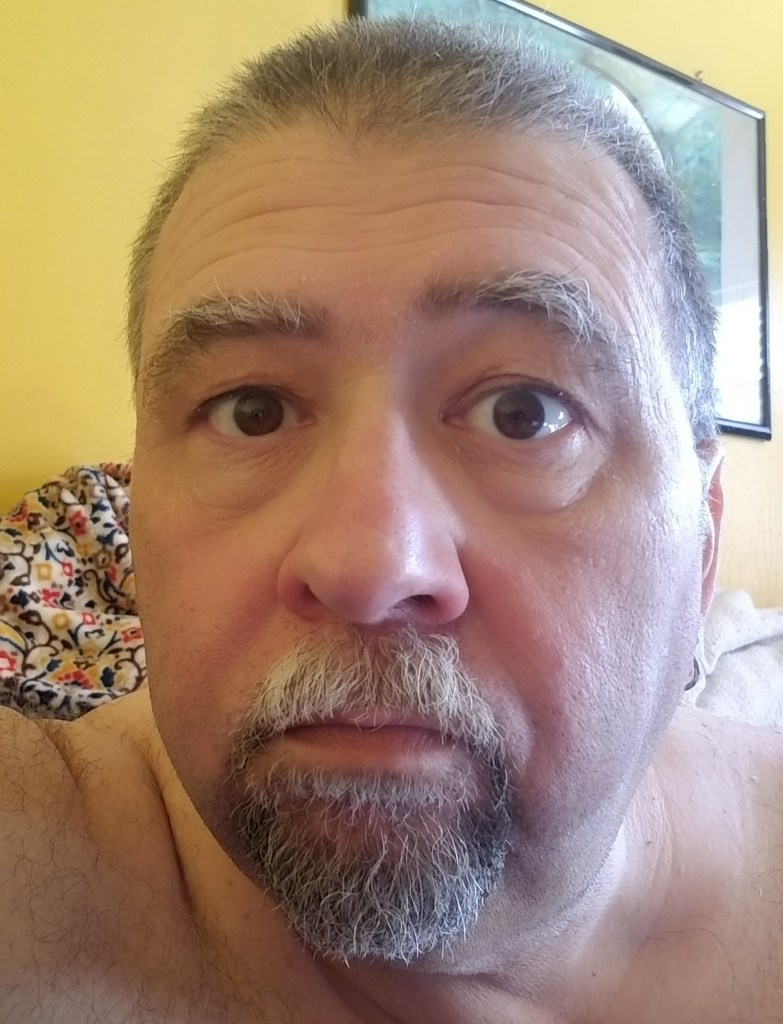
I bite the inside of my mouth. Tastes
like rust, like the inside of a long-uncleaned
tank —old blood, more iron than liquid.
Then I take a picture of my wounded face
and imagine who I’d be if I had better skin,
if I had better eyes and better hair —
you ask, who decides
what better means? If I had the face of another man,
is what I mean by it. A face born in another time,
better suited to another time.
You say I don’t know
what I mean by that, that I look like a man
at rest in his era, but you can’t taste
my antique blood. You can’t understand
how mournful, how wistful that I was not born
in a day unlike our own I can become. How broken
my own face makes me feel.
Lastly, I take a sip of water.
Shake off the messy moment.
Step back into these blowback days.
Uncle
Uncle says he loves you.
Holds it together for you
in spite of his tornado brains.
Reaches out to pull you off
the diminishment track
ahead of the demolishing train.
Go to your dream space, he tells you.
I can’t save you but you’ll be safe there.
I have to stay here by the track
and play bait and bail out songs
to bring the train down to a crawl
that could still kill but you should be able
to get out of the way with only mangled limbs.
This is what Uncle does. He was
never father but was a son, a brother
of sorts at some point, knows
what he expected and never got. Can’t
do it all but has wrestled blue dragons,
black dogs, and accountants in charge of
finding you deficient; has beaten back fire,
thrust his arm into snapping jaws, paid debts
all for you. Uncle loves you,
asks nothing more in return than you
bring your own fullness to battle
and be what he wasn’t. Be one thing
he wasn’t and call the account square.
Be more than that and call it paid
with interest. Be all you can
and take the overpay back,
slay new dragons, tame new dogs,
and even if you don’t
recall Uncle forever after
it will be more than enough.
Not Again
Not again:
obvious lie,
the words alone
a weak response
to the moment.
Of course it’s about
to happen again.
I am tired
of saying it.
I’ve been so tied
to repeating those words
for so long
that my hand
has gone dead
for much beyond
cutting sad food and
trembling.
Any magic
that would work now
will have to move
beyond chanting.
Silver bullets.
Sacred daggers.
An army raised
in the land of
vengeful dead.
Broom
out in the streets —
massed like bristles
in a new broom
an urgent cleansing
in progress —
shaking off dust
chanting —
sound of layers of filth
beginning to shift
what was built from dirt
cannot stand —
new broom wrecking all
Families
1.
Inside a classically
tinfoil-windowed apartment
Armand sits and broods
over tangled news,
teasing out threads that lead
to other threads, pointing out
omens that predict
future omens.
Armand, his family says,
has always had the gift and the curse.
Which is which from day to day
they never know.
There’s not much distance
between the two.
2.
He’s two animals away
from having a full zoo,
is what the family
has always said about Erik
who can’t seem
to hold onto himself
for very long, thus
establishing a pattern
of strange footprints
left behind in an odd
and broken path. It’s not
even clear that
Erik has always been alone
on the journey if you
examine the tracks closely,
which the family thinks
is not at all
a good idea.
3.
If only there were
clear reasons for Daryl’s
monosyllabic insistence
upon standing so close
to the table
at Sunday dinner
that it becomes hard
to set and serve. Almost as if
he thinks the family
eats too much or
that he must block
their formality or
that Sunday dinner itself
could still be as deadly
as it was when he was
a youth.
4.
At eight AM
a baby skunk runs by
my front windows
with a yogurt cup on its head.
I try to catch it and yank it free
but my fear keeps me
from investing too much
in that effort to care;
I think maybe it will bite or
I will end up stinking
and blinded. It runs around
like madness itself trying
to get free
of what has happened
through no fault of its own
as it attempted to find
sweetness, sustenance;
as it attempted to live.
From The Bottom Of A Slot Canyon
I feel like I owe the world some explanation
for the breakdown where I live.
In truth I owe it nothing more
than to live as if I was whole
while not forgetting I am not,
but the feeling remains.
When I tell my story in public
I don’t mention feathers or powwows
or drums. I don’t speak of my old regalia
still hanging stiff with age
in my parents’ basement,
or of my memories of a late night fire
that was never left unattended.
These things are not for you to know;
they are all I have
and living here and now
has left me unsure of holding even those
long enough to take them to my grave.
When I tell my story in public
I do not speak Italian either.
Raised with that tongue till school
erased it. Much as my father lost his
when they took him away to school.
That is all there is to say to you
about Italian and my tongue;
there are more things to say
but they are not for you to know;
living here and now has left me unsure
of holding even those
long enough to take them when I go.
I feel as if an explanation is owed to someone
for the breakdown where I live
though I know there’s nothing owed to
anyone, really, on this side and possibly the next;
the feeling is strong nonetheless
and it drives me to speak in riddles such as this one
so let me say this:
when I tell my story in public
I am forced to shout it from the bottom
of a slot canyon. It does not carry well
to the top of the opposing walls.
I hold back more than I release
to keep from bringing the half-informed
to where I am, knowing how seldom
they arrive ready to listen.
In spite of the isolation here,
I believe I’ve done right by myself.
I feel I’ve done right by myself,
as right as I can,
but I still feel like an explanation
is owed to someone.
Play By Play
Tune in twenty-four
seven for the melody
of the moment. Explosions
and big deaths,
laws broken and hard weather
all get sung the same.
The newsreaders sing
the cadence of sport, sing
like play by play reporters.
They throw it to the sidelines
where generically handsome people
add touches of color to
their black and white
depictions of struggle
made simple and easy to
swallow. Every
story reduced
to winning and losing,
even if all there is
is loss. There is rarely
any story where
all are winning. That’s
not American enough.
Can’t be number one
without there being
a number two. They sing
that song in spite of
the fire behind them:
lullaby, fight song
for the last quarter.
Enough to make you turn it off
and go wail in a corner
waiting for silence to take over
and make you forget.
Make you want to stop caring
for any of it. Almost
as if
that was the plan from
the starting gun.
This Sudden Rest
This sudden rest is
unexpected:
so used to being agitated
and unable to relax that
the collapse, when it came,
was almost as welcome as it was
frightening. After all the wailing
from the floor, all the rolling
back and forth in anguish,
I’ve ended up feeling almost
as if I have been reprieved from
the weight of living, though
my body’s a bruise journal
from the hard surfaces
where I’ve flung myself
so many times. The pains,
reminders
of what has ended;
my scrapbook
of what I’ve survived.
I wouldn’t give them up
if I could. I have tried.
RV Nation
Going
as a lifestyle
has its perks.
One needn’t
be transfixed
on “home” if
you carry it
everywhere.
One needn’t
fret about
the changing
neighborhood
or how the
property has
depreciated
since, you know,
all these people
moved in. And
one needn’t worry
about all those
stationary problems —
sinks backing up
and the like. One
may just go and
buy something
house-like on wheels
and go, go, go.
It’s historically
healthy too to
regain the pioneer
spirit — open road,
living off the land,
campgrounds, blue
skies, see this big
country at last before
it’s overrun with
the Others. Maybe
one could outrun
it all. Maybe one
could even
cross a border
the right way and
keep going. No place,
after all, like home,
home with a range,
a pump out bathroom,
a pull out bed,
and all the gas
one can guzzle.
Keep going until
the end and then
be burned and scattered
wherever the end is:
keep going a little while longer
on the wind,
end up soaking into
the soil somewhere,
the green grass
of home or something
like that recalled from
the past before
the call of the karmic wheel.
Red Onions
The red onions are trying to kill us all
with germ tricks they learned from the lettuce
the chicken and beef
and poisonous canned shrooms
The next door neighbors are in on it too
They’re nasty people
Everything is trying to kill us
I ate a whole pizza by myself last night
The pizza made me do it
It is trying to kill me
It’s scary out there
and in here too
I took my blood glucose reading this AM
and it wasn’t as high as you’d expect
after a whole pizza
and a night of sloth
It’s killing me slow
the bastard disease
of my bastard pancreas
Not like the neighbors who want me
gone quick
those diseased bastards
I wear the mask of the moment
but it’s more so the killers don’t recognize me
in some unexpected moment when I am alone
than in the belief that it will save me from anything
in this place where everything is trying to kill us
even the red onions and the bad fats in the good food
and the sugar and the Nazis and my own head-sauce
full of bad things and all the flags that mean anger
is going to win today instead of any single moment of joy
I never trusted the chicken I admit
My neighbors keep chickens
so I’ve seen them in action
The eggs are suspect as well
but it is the betrayal of the red onions I feel most
How I once loved their transparent skin
and the full bite of the first bite in my mouth
I loved that more than I have ever loved my neighbors
I expected the worst from them but not you
my produce my food my sustenance my flavor
I will hunker down with Oreos and pure white sugar
I will maintain my diligence
Keep a watch on my neighbors with new glasses
At night I will eat white onions in spite
Rip off my mask and breathe on their doorknobs
Smear red onions on their car seats when they are asleep
I will die before I let them not die as I am dying
Betrayed by the food and the air
and the eyes peering through the near-closed blinds
of all the neighbors watching to see who will fall
You can hear a recording of this piece with music here: https://soundcloud.com/radioactiveart/red-onions
Words And Guitar
I wrote my first poem
when I was almost too young
and marked by that
went on to write only poems
for an entire lifetime;
that was music to me.
It was always music I sought
in words, how they butted up
to song, slope of one line into
another, beat of syllables
against my teeth and tongue.
When deep in later life
I touched my first guitar
I thought of all those poems
and as my fingers built chords
I recognized what was happening;
it was the same.
All of that is vanishing now.
The need to play is slipping
from me. I sit and think
of my dusty guitar
on the far wall. I sit
and think about the dust
on the seams of this poem.
There’s fantastic music,
clouds of it in fact,
still playing clearly
outside somewhere;
none of it
is meant
for me to play.


